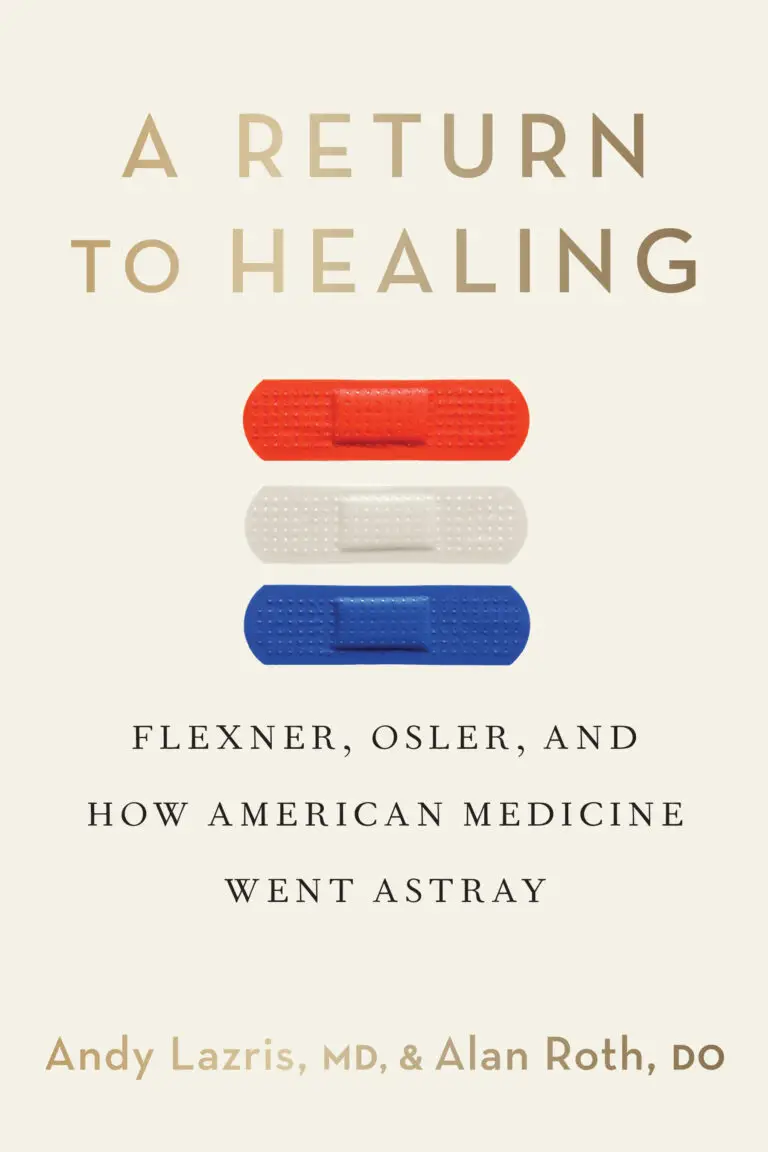
The new cholesterol guidelines are being sold as a simple upgrade in prevention. Lower LDL, fewer heart attacks, longer life. That is the pitch. But in this episode, Alan and I explain why guideline changes are rarely that clean. They can expand screening, widen treatment, and turn more healthy people into long-term patients, sometimes including pediatric cholesterol screening.
This matters because cholesterol is not just a lab value. It is a story medicine tells itself. When the story becomes “lower is always better,” the system starts practicing numbers-based medicine, where we treat the number and call it health.
If you have ever been told your LDL “should be under 70,” or you have been pushed toward more testing or more medications even though you feel fine, you are not alone.
Watch to the Podcast Episode
If you want more clear, skeptical, plain-language medicine, subscribe to the A Return to Healing YouTube channel and browse the full episode library.
Download the transcript (PDF)
What changed in the new cholesterol guidelines
The simplest way to describe the change is this: the guidelines push the system toward more aggressive LDL targets for more people. That sounds like prevention. In practice, it tends to mean more labeling and more escalation.
We talk in the episode about how targets like LDL under 70 become a goalpost that most people will not naturally meet, including many children. When you set a target that is out of reach for ordinary physiology, you create a built-in reason to prescribe something. That is not a conspiracy theory. That is how incentives behave.
The medical-industrial complex loves a moving target
The medical-industrial complex thrives on workflows that are measurable, repeatable, and billable. Lifestyle is none of those things. A target is all of them.
Once a guideline declares a “better” number, it cascades into: quality metrics, insurance coverage decisions, hospital protocols, training programs, and patient fear. That fear is not a side effect. It is the fuel. When people believe the number is destiny, they will accept almost anything to change it.
Risk calculators like PREVENT are not neutral
We discuss the PREVENT risk calculator because these tools have become a ritual. Enter numbers, receive a risk percentage, and then follow the implied treatment pathway. The problem is that many of these models lean heavily on population assumptions and observational data. That does not make them useless, but it does make them easy to oversell. When a tool feels authoritative, it can turn uncertainty into certainty and caution into prescription.
A human relationship is better than a risk calculator. A tool cannot see grief, stress, sleep deprivation, alcohol, loneliness, or the day-to-day reality of how someone lives.

Coronary calcium score is often the next domino
When guidelines widen the circle of “at risk,” testing tends to follow. Coronary calcium score (CAC) testing is one of the common next steps. Sometimes CAC can be useful in a narrow clinical context. But in a fear-based system, it also becomes a pipeline. A scan leads to a number. The number leads to anxiety. Anxiety leads to more medication.
This is a recurring ARTH theme: if you build a system around numbers, you will get more numbers. You will not automatically get more health.
Statin benefits exist, but it is smaller than most people think
One of the most important points we make is that statins are often described as if they are a magic shield. For selected higher-risk groups, there is benefit. But the size of that benefit should be explained honestly.
In the episode, we reference a simple absolute framing, the kind patients rarely hear: in a high-risk group, five years of treatment might lower the chance of a major event by roughly one percent. That is absolute risk reduction, and it is the statistic that keeps everyone grounded. Relative numbers sound dramatic. Absolute numbers tell the truth.
Statins can be reasonable. Blind faith is not.

The escalator: Zetia, then PCSK9 inhibitors
Once “lower is better” becomes dogma, the system needs a solution for people who do not hit the target on statins alone. That is where add-on drugs enter the story. PCSK9 inhibitors like Repatha can dramatically lower LDL. But the cost can be enormous, and the evidence narrative gets muddy fast when the endpoint is a lab value instead of whether people live longer or feel better.
This is why numbers-based medicine is not just philosophical. It changes what people pay. It changes what insurers cover. It changes what medicine becomes.
What should you do if your clinician is pushing lower targets
If your clinician is following the ACC/AHA cholesterol guidelines closely, you do not have to be adversarial. You just need better questions.
Ask what outcome the new target is supposed to prevent for someone like you, and ask how large the benefit is in absolute terms. Ask what the downsides are, including side effects, interactions, and the burden of lifelong medication.
Then ask the question that medicine avoids because it is hard to bill: what else in your life is driving risk. Food quality, strength, sleep, stress, smoking, alcohol, and chronic inflammation matter. They do not make great guidelines, but they make real health.
How We Return to Healing
The new cholesterol guidelines may be well intentioned, but they can also widen the gap between medicine and health.
Watch the episode, download the transcript, and share this with someone who has been told that their worth, or their future, is tied to a single LDL number.
→ Watch the episode on YouTube
→ Download the transcript (PDF)
→ Explore A Return to Healing and learn the deeper framework in our book
Proofread by Dr. Alan Roth
This post was reviewed for medical clarity and balance by Dr. Alan Roth, Co-writer of A Return to Healing. The goal is not to ignore cardiovascular risk. The goal is to avoid turning the public into patients by chasing LDL targets instead of pursuing health.
New Cholesterol Guidelines FAQ
Are the new cholesterol guidelines the same for everyone?
Guidelines are population tools. Individuals differ by age, symptoms, other conditions, and what they value. A good plan should reflect you, not just a target.
Is LDL cholesterol useless?
No. LDL is information. The danger is treating it like destiny, or assuming that changing the number always changes the outcome you care about.
Do statins work?
They can help in certain contexts, especially higher-risk groups. The benefit is often modest in absolute terms, which is why the decision should be shared and individualized.
What is a coronary calcium score?
CAC is a CT-based test that estimates calcified plaque in coronary arteries. It can be useful for selected decisions, but it can also become part of a fear-driven testing cascade.
Why are risk calculators so common now?
They are easy to use, easy to document, and fit into numbers-based medicine. They can also create false certainty when the underlying assumptions are not discussed.