If you have been paying attention to healthcare headlines, you have probably seen the new promise: a blood draw or a scan that can tell you whether Alzheimer’s is coming. In theory, an amyloid test for Alzheimer’s sounds like progress. Less uncertainty. Earlier diagnosis. More “action.”
In reality, this episode is about a hard truth that modern medicine resists: more information is not always better. Too often, it simply opens a door to fear, over-testing, and drugs that improve a measurable marker while failing to improve the thing people actually care about: cognition and quality of life.
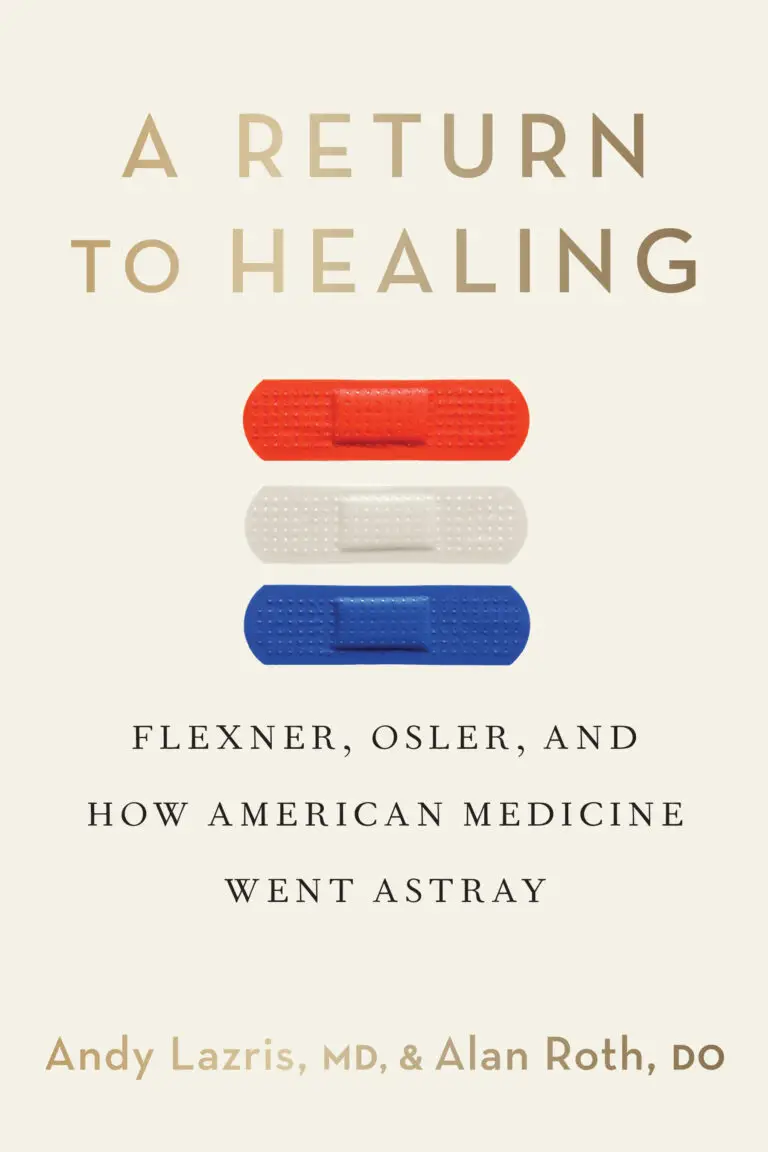
If you have not read our book, A Return to Healing, this is one of the central themes. The medical system increasingly worships measurable abnormalities, then builds a treatment industry around them. Amyloid tests are the newest example.
Watch to the Podcast Episode
If you want more plain-language medicine that does not confuse markers with outcomes, subscribe to the A Return to Healing YouTube channel.
Download the transcript (PDF)
Why amyloid testing is exploding right now
This is the simplest explanation, and it matters. We are not testing for amyloid because it suddenly became clinically decisive. We are testing because there are now drugs designed to treat amyloid. Andy says this directly in the episode: if there were no drug, we would not be doing these tests.
That is not how patients think about it. Patients hear “test” and assume it exists because it helps them. Often, the test exists because it expands the market for a treatment.
To be clear, amyloid is real. You can measure it. The question is what it means for an individual human being sitting in front of you, and whether acting on it improves outcomes.
The uncomfortable reality: amyloid is not destiny
One of the strongest points in the episode is the selection bias problem. The brains we study most often are from people who already have dementia. That makes it easy to “prove” that amyloid is tied to dementia, because you started with the group most likely to have abnormalities.
If you study 95-year-olds who remain sharp, you may still find significant amyloid. Aging is complicated. Biology is messy. A marker being present does not automatically mean it is the cause, or that it is the right target.
This is why “amyloid positive meaning” is one of the most important searches people run. The honest answer is: it may indicate risk, but it does not provide certainty about your future, and it does not automatically tell you what to do next.
The surrogate endpoint trap
If you take away one concept from this episode, take this one: surrogate endpoints.
A surrogate endpoint is a measurable marker that is assumed to predict a clinical outcome. Lower blood pressure is a surrogate for fewer strokes. Lower LDL is assumed to mean fewer heart attacks. Lower amyloid is assumed to mean better cognition.
But the medical world has a habit of celebrating changes in surrogates even when patients do not feel or function better.
In the transcript, we talk about anti-amyloid drugs that show amyloid reduction without evidence of meaningful cognitive improvement. The FDA describes Aduhelm’s accelerated approval as being based on amyloid plaque reduction as a surrogate endpoint, with clinical benefit expected but not established.
That distinction is not academic. It is the difference between “this changes a number” and “this helps you live better.”
“You can never have too much information” is a dangerous idea
A patient sees a blood test or a scan and thinks it can only help. In the episode we push back hard on that belief. Too much information can be harmful because it can lead you down a road you never needed to travel.
Here is what that road often looks like:
You get tested. You get labeled. You get referred. You get medicated. You get monitored. You get scared. You start living like a patient.
And in dementia care, there is an additional cruelty: once a label enters the chart, it can follow someone for years, shaping how every clinician interprets ordinary human behavior.

The testing cascade is not cheap
In this episode, Andy tells a story about a “memory expert” ordering an expensive battery of tests, including a PET scan, plus pages of blood tests aimed at amyloid.
This matters because the downstream cost is not only financial. It is emotional. It changes how families treat each other. It changes how patients see themselves. It can turn a functional person with mild forgetfulness and anxiety into someone who believes they are already lost.
Separately, it is worth knowing that the FDA has now cleared blood tests that detect biomarkers associated with amyloid plaques in certain symptomatic adults, which can reduce reliance on PET scans. That will likely accelerate the “test first” mentality, because blood draws are easier than scans.
Dementia drugs are a placebo problem that never goes away
Andy and I both say we do not start patients on the classic dementia drugs by reflex, because the evidence of meaningful benefit is weak. The conversation we have in the episode mirrors what we describe in the book: caregiver reports and test scores are often indistinguishable between drugs and placebo.
This is not about being anti-medicine. It is about being honest about what medicine can and cannot do, and refusing to sell false certainty.
What helps more than labels
This is the part people want to skip, because it is not as exciting as a scan. It is also the part that actually matters. The best evidence-supported protection against cognitive decline looks boring:
- Movement
- Strength
- better food quality
- Sleep
- meaningful relationships
- stress reduction
- preventing falls
If that feels too “simple,” remember the real point: the things that most influence long-term health are rarely available as a billable product.
How we can Return to Healing
If you are considering an amyloid test for Alzheimer’s, slow down and ask what the result will change. Ask whether it improves cognition or quality of life, or whether it simply opens the door to fear and a treatment pipeline.
Watch the episode, download the transcript, and share this with someone who has been told that more testing is always better.
→ Watch the episode on YouTube
→ Download the transcript (PDF)
→ Explore more A Return to Healing posts and the framework in our book
This post was reviewed for medical clarity and balance. The goal is not to ignore cognitive symptoms. The goal is to avoid confusing more testing with better care, and to keep patients out of fear-driven pipelines when outcomes are uncertain.
Amyloid & Alzheimer's FAQs
What is an amyloid test for Alzheimer’s?
It is a test that measures biomarkers associated with amyloid plaques, either via blood tests or imaging such as an amyloid PET scan. These tests can aid diagnosis in appropriate symptomatic patients, but they do not automatically predict an individual’s future or guarantee a clear treatment benefit. (U.S. Food and Drug Administration)
What does amyloid positive mean?
It suggests amyloid pathology is present. It does not prove amyloid is the cause of symptoms, and it does not guarantee progression. Context matters, including age, symptoms, function, and other explanations.
Should everyone with mild forgetfulness get tested?
Not automatically. Many people experience mild changes with age, anxiety, sleep issues, medications, or stress. Testing can create labeling and anxiety without changing outcomes.
Why are amyloid tests being promoted now?
Because there are now therapies aimed at amyloid, and testing expands eligibility and demand. The episode states this plainly: testing follows the drug.
Do anti-amyloid drugs improve cognition?
Some approvals have been based on amyloid reduction as a surrogate endpoint rather than established clinical benefit. Patients should ask what outcomes improved that they actually care about. (U.S. Food and Drug Administration)
What can I do that actually reduces dementia risk?
Focus on the fundamentals that protect brain health: movement, strength, sleep, reducing ultra-processed foods, stress reduction, and social connection.