Why We Read About Healthcare Inequality and Social Change
True reform doesn’t start with legislation or billing codes. It begins with a question: what kind of care do we owe each other?
As physicians, we’ve seen how easily medicine drifts from compassion toward commerce. Reading the best books about healthcare inequality reminds us why this work matters—because every patient deserves to be seen, heard, and treated with dignity.
In this final part of our series on essential books shaping healthcare reform, we explore titles that challenge America to face its moral failures—and we close with A Return to Healing, a vision for rebuilding medicine from the inside out.
How We Chose These Books
We focused on titles that:
Examine injustice and inequality at the heart of American medicine
Pair systemic critique with paths toward ethical, compassionate reform
Reflect A Return to Healing’s values of trust, dignity, and relationship-based care
7. Just Medicine: A Cure for Racial Inequality in American Health Care — Dayna Bowen Matthew
In Just Medicine, Dayna Bowen Matthew exposes the persistent racial bias, structural inequity, and institutional inertia that define far too much of American healthcare. Through clear analysis and powerful storytelling, she demonstrates how discrimination—both explicit and unconscious—continues to shape who receives care, what kind of care they receive, and how outcomes are measured.
Matthew argues that true reform requires accountability at every level: from government and insurers to hospital leadership and medical educators. She calls for legal, cultural, and systemic change—making the case that bias is not just a moral failure, but a measurable public health crisis.
Like Just Medicine, A Return to Healing refuses to accept a system that treats some lives as worth more than others. But where Matthew focuses on policies and institutions, we look at what happens in the room between doctor and patient. We believe justice also lives in small, daily moments—when a physician slows down, listens fully, and treats a patient’s story as sacred, not statistical.
Every act of empathy is a small act of reform. Listening becomes resistance. Healing becomes justice in motion.

8. The Social Transformation of American Medicine — Paul Starr

Paul Starr’s The Social Transformation of American Medicine remains one of the most important works ever written about the structure—and soul—of American healthcare.
Through exhaustive history and keen sociological insight, Starr traces how a calling became an industry, how trust gave way to transaction, and how the physician’s role evolved within an increasingly corporate and bureaucratic system.
He doesn’t villainize doctors or institutions; instead, he shows how the accumulation of small incentives and policy choices created a medical culture defined by hierarchy, prestige, and market power. His story is both historical and prophetic, explaining why today’s healthcare system feels so impersonal—and why it resists meaningful reform.
Starr chronicles the rise of the system; A Return to Healing calls for its rebirth. We share his conviction that medicine must be reimagined, but we focus on the human transformation that must accompany the structural one.
Real reform isn’t only written into policy—it’s lived at the bedside.
9. The Pain Gap: How Sexism and Racism in Healthcare Kill Women — Anushay Hossain
In The Pain Gap, Anushay Hossain exposes one of the most overlooked crises in modern medicine: how gender and racial bias continue to endanger women’s lives, particularly women of color. Drawing on investigative reporting and personal stories, she reveals how women’s symptoms are often dismissed, their pain minimized, and their trust in the medical system betrayed.
Hossain connects the dots between policy failure, medical training, and cultural conditioning, showing that the roots of this inequity run deep. Her stories of childbirth trauma, diagnostic delay, and disbelief paint a portrait of a system that listens selectively—and too often, too late.
Her message is clear and urgent: until women’s voices are believed, there can be no true healthcare justice.
Like The Pain Gap, A Return to Healing insists that listening is an ethical act. Both books ask the same essential question: Whose pain counts?
While Hossain documents the societal forces that silence patients, we focus on how clinicians can break that silence. Healing begins when doctors trust stories as much as they trust data—when care becomes a dialogue, not a directive.
“Every patient’s story matters,” we write in A Return to Healing. “That’s where medicine begins—and where it went wrong.”

10. A Return to Healing: Flexner, Osler, and How American Medicine Went Astray — Andy Lazris, MD, and Alan Roth, DO
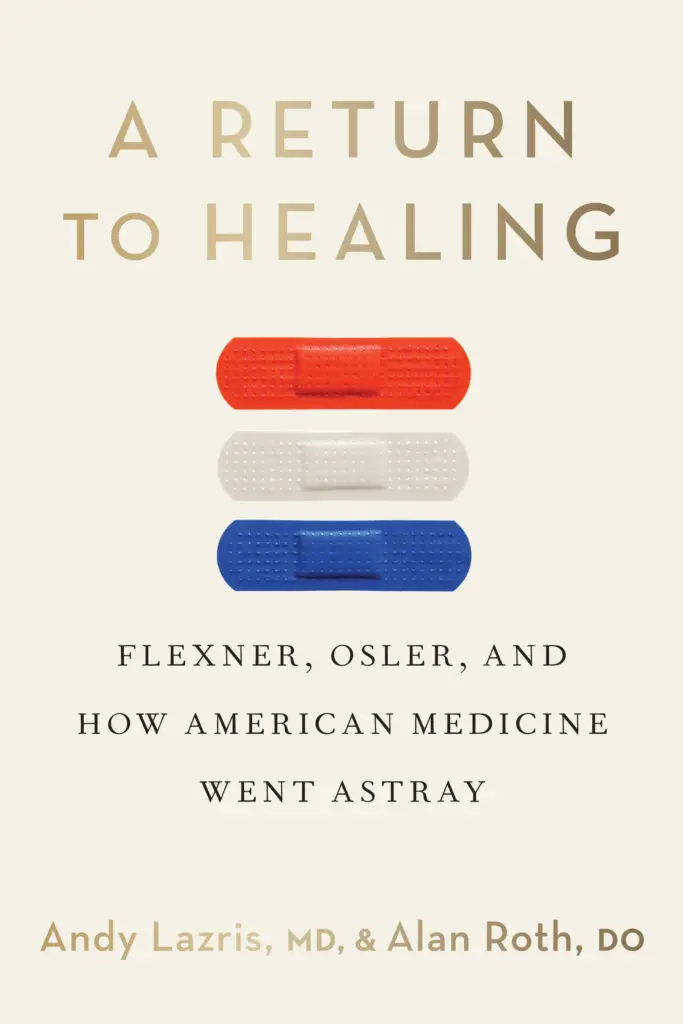
In A Return to Healing, Drs. Andy Lazris and Alan Roth confront one of the most difficult questions in modern medicine: How did a profession built on compassion become an industry built on control?
Drawing from decades in primary care, geriatrics, and community medicine, the authors expose how bureaucracy, fear, and profit have replaced the simple art of healing. But this book is not a lament—it’s a manifesto. They offer a path forward through relationship-based, patient-centered care that restores trust between physicians and the people they serve.
Their writing is equal parts personal reflection, policy insight, and moral reckoning. Through real stories of patients and clinicians, they reveal how empathy, humility, and time can transform outcomes more powerfully than any metric or mandate.
“Healing begins when medicine remembers it’s human.”
A Return to Healing Tweet
Every book in this series has shown what’s wrong with our system. A Return to Healing shows how to make it right. It bridges history, sociology, and ethics with lived clinical wisdom—proving that reform doesn’t need to start with new laws or technologies, but with a renewed commitment to see, listen, and care.
From Insight to Action: A Return to Healing’s Vision for the Future
Each of these authors demands that we face what’s wrong in American medicine. A Return to Healing asks what we’ll do next.
We believe reform must grow from dignity, trust, and partnership—not fear and compliance.
When physicians and patients meet as equals, care becomes personal again. Policy can create structure, but only compassion can create healing.
“When every patient’s voice is heard, real healing—and real justice—begin.”
A Return to Healing Tweet
Ready for Patient-Centered Change?
If this series has challenged or inspired you, we hope it also leaves you with optimism. Healthcare can change—because it’s made of people, and people can choose to care differently.
Order A Return to Healing and discover how modern medicine can rediscover its humanity.