A state medical board investigation is supposed to be a last resort for doctors who commit real fraud, harm patients, or behave unethically. In practice, it can start with something far smaller: a complaint, a misunderstanding, or a disagreement about how medicine should be practiced.
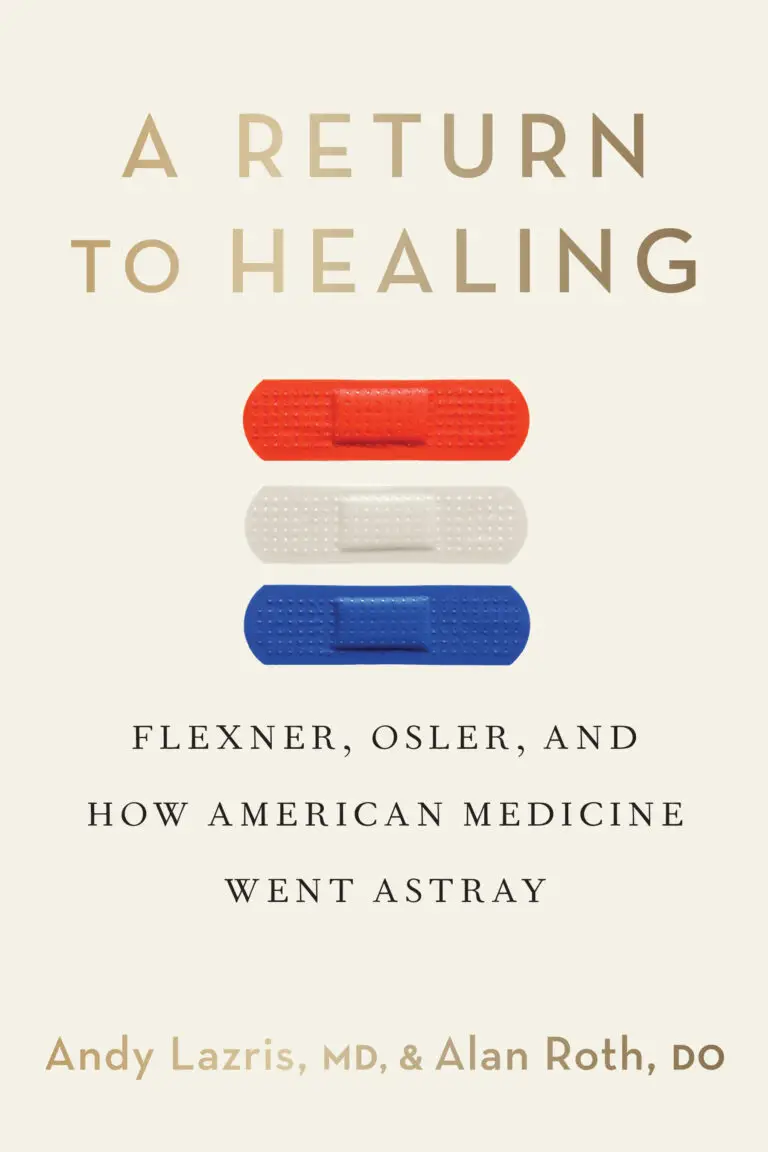
In this episode, Andy and I talk about why that matters to patients. When doctors fear punishment for speaking plainly, medicine becomes quieter, more protocol-driven, and less honest. It also becomes easier for guideline politics and specialty interests to masquerade as “settled science.” If you have read our book, A Return to Healing, you already know the theme: systems do not just shape care. They shape what can be said out loud.
This post is meant to give you a patient-first roadmap of what is happening, why the “misinformation” label is so powerful, and how a disciplinary process can distort care even when nobody is found guilty of anything.
Watch the episode on YouTube
If you like this kind of patient-first, evidence-forward medicine, subscribe to the Return to Healing YouTube channel and browse the episode library.
How a state medical board investigation actually starts
Most people imagine a formal process with clear rules, a high burden of proof, and a standard that feels like a courtroom. Medical boards do not always work that way. States regulate medical licenses, and boards have broad authority. The result is a system where the process itself can be the punishment.
A complaint can come from a patient, a family member, a colleague, an employer, or a stranger who dislikes what a doctor said. Some complaints are necessary. Many are noise. But once a complaint becomes an investigation, the doctor is forced into defense mode, often at personal expense.
That changes behavior. It encourages “keep your head down” medicine. It makes doctors default to protocol, even when protocol does not fit the patient in front of them.
Why “misinformation in medicine” is such a loaded label
“Misinformation” sounds like a clear word. It is not.
In the real world, medicine is full of uncertainty. What counts as best practice changes constantly. We have all lived through eras where doctors were criticized for not prescribing enough opioids, and then criticized for prescribing too many. The confidence comes first. The evidence catches up later.
The problem is not that boards should ignore blatant grifting or dangerous behavior. The problem is when “misinformation” becomes a shortcut for “noncompliance.” If a doctor questions a guideline, or points out that a policy is producing harm, the system can treat that as a threat rather than a discussion.
This is where physician free speech matters. Not as a political slogan. As a patient safety principle. A system that punishes dissent trains everyone to repeat the same talking points, even when those talking points fail.
Guidelines as weapons and specialty society power
Guidelines can be useful. They can also become a lever.
A guideline produced by a specialty society can behave like a rule, especially when insurers, hospital systems, and quality programs treat it that way. Over time, the guideline becomes less like advice and more like a compliance test.
This is where “American College of Cardiology guidelines” comes up in our conversation. The point is not that cardiology is uniquely bad. The point is what happens when specialists define targets and protocols that expand treatment populations, and when those targets get enforced by systems that reward compliance.
This is the logic of numbers-based medicine. Treat the number, not the person. Hit the target, check the box, move on.
But older adults do not live inside targets. A frail 82-year-old is not a risk calculator. A patient with multiple chronic conditions is not an LDL number or a blood pressure threshold. That is why judgment matters, and why a compliance culture is dangerous.
The opioid pendulum and why thoughtful prescribing gets punished
One of the clearest examples of institutional whiplash is opioid prescribing. Doctors were pushed toward aggressive pain treatment. Then the pendulum swung, and the same system began punishing doctors for prescribing, even when the prescribing was judicious and compassionate.
The conversation in this episode includes a case that captures the problem. A doctor tries multiple options, discusses risks and benefits, and uses a medication like methadone for pain after other approaches fail. Later, a complaint triggers an investigation. The board process becomes a year of anxiety, legal costs, and scrutiny.
Patients should understand this dynamic because it changes what doctors feel safe doing. It encourages under-treatment of pain for some people and overuse of safer-sounding but harmful alternatives for others. It also shifts attention away from what matters: function, quality of life, and careful shared decision-making.
What patients can do when you hear “the guideline says so”
You do not need to argue about guidelines. You need to ask questions that force clarity.
Here is the patient script that stops autopilot medicine without starting a fight:
Ask what outcome this recommendation is meant to change for you.
Ask how big the benefit is in absolute terms.
Ask what harms are common and what harms are rare but serious.
Ask what happens if you wait.
If a clinician cannot answer those questions, it is not informed consent. It is compliance.
When boards and systems punish doctors who slow down and explain nuance, patients get a version of medicine that is louder about certainty and quieter about tradeoffs.
How to decide without fear
A state medical board investigation is not only a doctor problem. It is a patient problem. When the punishment for nuance is paperwork, lawyers, and professional threat, the system selects for the safest speech and the safest behavior.
Safe does not mean good.
Good medicine is often uncomfortable. It requires saying “we do not know.” It requires personalizing decisions. It requires admitting that sometimes doing less is safer than doing more.
That is what we are protecting when we defend honest medical discussion.
This is how we Return to Healing
If you want medicine that treats you like a person and not a compliance project, start here:
Watch the episode, read the companion blog, and share it with someone who thinks “misinformation” is always obvious and guidelines are always neutral.
→ Watch the episode on YouTube
→ Download the transcript (PDF)
→ Explore our book, A Return to Healing
State Medical Boards Investigations FAQ
What is a state medical board investigation?
A formal review by a state licensing board triggered by a complaint or report, which can involve records review, interviews, hearings, and potential disciplinary action.
Can a doctor be investigated even if they did nothing wrong?
Yes. An investigation can start from an allegation, not a verdict. The process itself can be costly and stressful.
Is it illegal for a doctor to criticize guidelines?
Criticizing a guideline is not inherently unethical. The concern is how loosely “misinformation” can be applied, especially when guideline compliance is treated as the only acceptable medical view.
Why does this matter to patients?
Because fear changes practice. It encourages check-box medicine, discourages nuance, and can increase overtreatment or undertreatment depending on what the system is rewarding.
How can patients protect themselves?
Ask outcome-based questions: What changes for me, how big is the benefit, what are the harms, and what happens if we wait.
Proofread note
This article was reviewed by Dr. Andy Lazris for clarity and balance. The aim is not to eliminate standards. The aim is to prevent enforcement culture from replacing clinical judgment and shared decision-making.