A state medical board investigation sounds like something that happens when a doctor harms a patient. That is what most people assume, and honestly, that is what the public deserves: oversight that protects patients from real misconduct.
But in this episode of the Return to Healing Podcast, Alan and I walk through a different kind of story. A cardiology group objected to a patient newsletter I wrote and then pursued a complaint. What followed was not a clinical debate. It was a warning shot. It shows how “guidelines” can be used as a weapon to enforce conformity, protect revenue streams, and discourage clinicians from speaking plainly to patients.
Listen to the Podcast Episode
If you want more patient-first medicine and fewer protocol sermons, subscribe to the A Return to Healing YouTube channel.
Download the transcript (PDF)
What a medical board investigation is supposed to be
In principle, a board complaint exists to protect the public. Boards investigate allegations within their jurisdiction and review whether a physician violated the medical practice act. Even official materials describe the process as complaint intake, jurisdiction review, investigation, and specialty consultant review when clinical issues are involved.
That is the ideal. The risk is that the same process can be used as pressure. A complaint does not have to be true to be disruptive. It only has to be filed.
How medical board guidelines become weapons
Guidelines are not laws. They are recommendations, often written by panels with conflicts and assumptions. In the best case, they are a summary of evidence. In the worst case, they become a cudgel.
Here is what “weaponized guidelines” look like in real life:
A doctor communicates with patients in plain language. Another group dislikes the message because it threatens a business model or challenges a standard script. Instead of debating the evidence in the open, they escalate to a complaint.
That is not science; it’s enforcement.

This is why we talk about physician free speech. Not because doctors should say anything without responsibility, but because patients deserve more than one permitted viewpoint. They deserve honest uncertainty. They deserve to hear absolute risk, not marketing.
We just covered how LDL targets keep moving and why ‘treating the number’ backfires.
Why the System Encourages It
A Return to Healing describes how the medical-industrial complex thrives on constant intervention. Hospitals, device manufacturers, and pharmaceutical companies all profit from expanded definitions of disease.
More testing means more findings, more procedures, and more drugs—regardless of whether they improve health outcomes.
Doctors, too, are caught in this cycle, driven by legal fears, time limits, and performance metrics.
“We’ve built a system that values detection over discernment,” says Dr. Roth. “Sometimes, the best medicine is restraint.”
Numbers-based medicine is the common thread
In the episode of the Return to Healing Podcast, we keep coming back to the same diagnosis: numbers-based medicine. It treats lab targets like moral obligations and treats deviation as disease, even when the patient is well.
It also creates a predictable cascade:
lower LDL targets lead to more medication escalation; more medication escalation requires more follow-up; more follow-up increases billing; and the system calls it “prevention.”
This is not an accusation. It is an incentive map and the same disease branding playbook, just dressed up as quality.
LDL Under 70: Cholesterol Testing and the Cardiology Pipeline

A major flashpoint in modern prevention is the insistence that almost everyone should aim for LDL under 70. Once you accept that premise, you create a permanent customer base because many people will not reach that target without multiple drugs.
And when patients ask questions, the system often answers with more testing. Stress tests, echocardiograms, carotid ultrasounds, CT scans. It looks thorough. It also looks like a business plan.
Here is the part that rarely gets said to patients: major cardiology organizations have participated in “Choosing Wisely” recommendations meant to reduce unnecessary testing in low-risk or asymptomatic contexts. For example, ACC materials include recommendations warning against routine or repeated imaging in situations where it does not change management. That should tell you something; even the specialty societies know that testing can become reflexive.
The primary care crisis makes this worse
When primary care is underpaid and crushed, patients get less time, less continuity, and less context. That vacuum gets filled by protocols and specialists, and protocols are the easiest thing to defend in a complaint.
The tragedy is that good medicine is not a protocol; It’s judgment; It’s relationships; It’s shared decision-making. But shared decision-making is slow, and the system penalizes slow.
What patients can do when the system pushes fear
If a guideline is being used to scare you, bring the conversation back to outcomes. Ask what the benefit is in absolute terms, not relative terms. Ask what happens if you do nothing for a year. Ask what the downside is, including side effects, false positives, and the psychological weight of becoming “a patient.”
Then ask the question that exposes the whole game:
What will this test or drug change about my life, other than my chart?
You are allowed to want prevention. You are also allowed to refuse a pipeline.
How we can Return to Healing
A state medical board investigation should exist to protect patients. It should not be a tool to silence debate or enforce guideline dogma.
If you have ever felt pressured into a test or medication because “the guideline says so,” watch this episode and share it with someone who is being treated like a number.
→ Watch the episode on YouTube
→ Download the transcript (PDF)
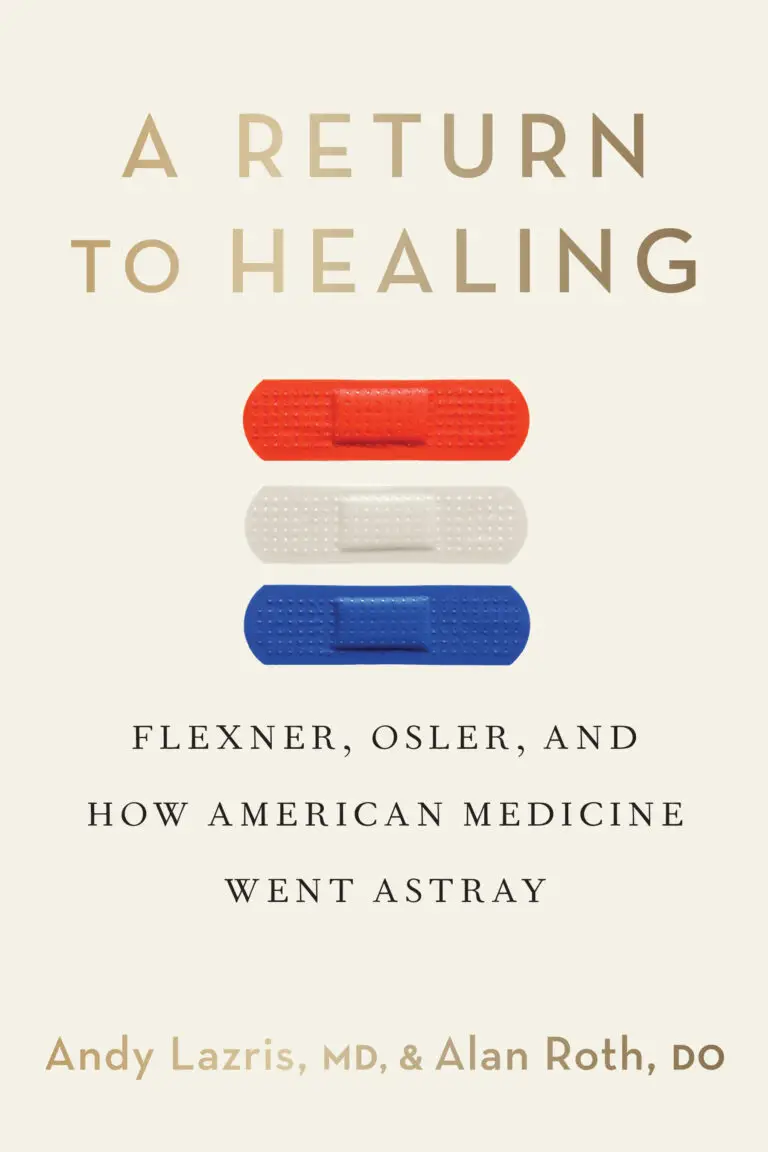
→ Read more from A Return to Healing and explore the framework in our book
Proofread by Dr. Alan Roth
This post was reviewed for medical clarity and balance. The goal is not to dismiss guidelines or oversight. The goal is to keep medicine patient-centered, evidence-based, and honest about uncertainty.
State Medical Board Investigation FAQs
Can another doctor trigger a state medical board investigation?
Yes. Boards accept complaints from many sources, including healthcare professionals. The board then determines jurisdiction and whether the complaint warrants investigation.
Does a board complaint mean the doctor did something wrong?
Not necessarily. A complaint is an allegation. The process itself can still be stressful and time-consuming even if the case is dismissed.
Are guidelines legally binding?
Guidelines are recommendations, not laws. They can influence standard-of-care arguments, but they are not absolute rules that apply to every patient.
Why does LDL under 70 come up so often?
Lower LDL targets expand treatment eligibility and drive medication escalation. Patients should ask for absolute benefit and individualized risk discussion before treating a target as destiny.
How do I avoid unnecessary cardiac testing?
Ask what the test will change about your management. If the answer is “we just want more information,” ask what decision that information will drive. Also consider that cardiology organizations themselves have Choosing Wisely guidance aimed at reducing low-value testing.