I had an Uber driver this weekend who gave me a better lecture on common-sense nutrition than most of American medicine.
He was a kind older guy from Spain, probably in his seventies, and he was a talker—in the best way. We got onto health, and he said something that landed with a thud because it’s so obvious it’s embarrassing:
“In this country, your doctors don’t know anything about nutrition.”
He wasn’t trying to be edgy. He was confused. In Portugal and Spain, he told me, people don’t “study” nutrition like it’s a specialty hobby. They just… eat food. Real food. Without turning it into an identity.
And that’s the theme of Episode 47: in America, nutrition exists in two different universes—the one normal humans live in, and the one our medical establishment keeps trying to sell you.
Watch the Episode 47 of the A Return to Healing Podcast on YouTube
If you’d rather listen than read (or you want the full context and a few extra laughs), here’s the full episode from our YouTube Channel.
Common-Sense Nutrition TL;DR (for real people)
- If you want one “diet rule,” make it this: avoid ultra-processed food.
- Stop treating nutrition like a courtroom drama where fat is guilty and sugar is innocent.
- A medical shortcut (like a weekly shot) doesn’t magically make a junk-food diet healthy.
- “Healthy eating” should feel like common sense, not a religion.
Two universes: food vs. “medical nutrition”
Here’s what the medical universe often looks like:
- One-right-answer diet plans
- Fear-based food rules
- A bizarre obsession with labels and numbers
- And enough dogma to make you think you need a board certification just to eat lunch
Meanwhile, in the normal universe: people eat vegetables, fruit, eggs, fish, meat if they want it, and they try not to live on factory food. They don’t need an 80-hour course to understand that something neon-orange in a wrapper probably shouldn’t be a daily staple.
This shouldn’t be controversial.
And yet… here we are.
The fat panic was never “science,” it was marketing (and we paid the price)
We’ve been trained to think “low-fat” equals “healthy.” But when the low-fat craze took off, food companies didn’t respond by making healthier food.
They responded by removing fat… and replacing it with sugar and refined flour to keep it tasting like something you’d actually eat.
So we ended up with “fat-free” cookies that were basically sugar delivery systems. Then we invented fake fats. Then we acted surprised when people got sicker.
If you take nothing else from this: it’s not fat versus carbs. It’s real food versus ultra-processed food.
Ultra-processed food is the villain hiding in plain sight
Let’s define the enemy without getting weird about it:
- Processing a food is not automatically “bad.”
- You can cut, cook, freeze, blend, ferment—those are normal human things.
But when your “food” is engineered in a lab, loaded with additives, stabilizers, dyes, and industrial ingredients designed to make you keep eating… that’s not cooking. It’s product design.
You can call it “convenient,” “affordable,” and even, “tasty.”
Just don’t call it health.


The GLP-1 shortcut problem: “Eat junk, just eat less of it”
We also talked about GLP-1 weight loss shots—because right now they’re the ultimate expression of the medical mindset:
“Don’t change your food environment. Don’t learn anything. Just take a shot.”
Here’s my concern: if your diet is still built on ultra-processed food, and you simply eat less of it, you can wind up under-nourished while still eating junk.
That’s not health. That’s calorie restriction with a side of nutrient deficiency.
Your gut doesn’t run on vibes. Your microbiome doesn’t thrive on “protein chips” and “diet bars.” If you starve your gut of the fibers and nutrients it needs, you can pay for it in all sorts of downstream ways—energy, mood, immune function, metabolic health… the whole system.
The goal is not “smaller you.” The goal is healthier you. Those aren’t always the same path.
“Eat local and organic”… with one big caveat
In a perfect world, you buy local, in-season foods from farms you trust. Food that didn’t spend weeks traveling across the planet while losing freshness and nutrients.
But we also have to be honest: not every “local” situation is clean.
Some regions have contaminated soil and water. Some farmland has a chemical history. And even “organic” can have blind spots if the ground itself is polluted.
So yes—buy local when you can. But don’t turn your brain off just because a label makes you feel safe.
Common sense again.
Practical nutrition without turning it into a religion
If nutrition advice makes you feel like you need to join a cult, you’re in the wrong room.
Here’s the version that works for most humans:
Build most meals from real food:
vegetables and fruit; beans/lentils if you like them; eggs (quality matters); fish, chicken, meat if you want it (quality matters); nuts, olive oil, avocado; fermented foods if you tolerate them
If you eat meat or eggs, care more about quality than purity tests:
Pasture-raised. Grass-fed. Minimally processed. And if it’s expensive? Eat less of it. Twice a month is fine. Half portions are fine.
Aim for “most of the time”—not perfection
A lot of nutrition studies assume people will be compliant about 80% of the time. That’s realistic. That’s human. Have the sandwich. Enjoy the deli. Just don’t build your entire life around food that was designed to be addictive.
Make the easy environment change:
One of the simplest habits Dr. Alan Roth mentioned: bring lunch to work. Not glamorous. Not viral. Just effective.
If you only do three things this week
Read ingredient lists once in a while. If it looks like chemistry homework, don’t make it daily food.
Add one real-food meal you can repeat. Not forever. Just a default you can rely on.
Keep your “problem foods” out of your house if you know you can’t stop at one serving. (Yes, I’m calling sugar what it often is: an addiction trigger. I’ve lived it.)
Closing thoughts on Common-Sense Nutrition
The most frustrating part of all of this is that it’s not complicated. We keep searching for a magical diet plan, a trendy villain, a single superfood, a weekly injection, or a new acronym. But most of the time, the answer is painfully unsexy:
Eat real food. Avoid ultra-processed food. Diversify what you eat. Don’t turn nutrition into a religion. And stop letting industries that profit from sickness define what “healthy” means.
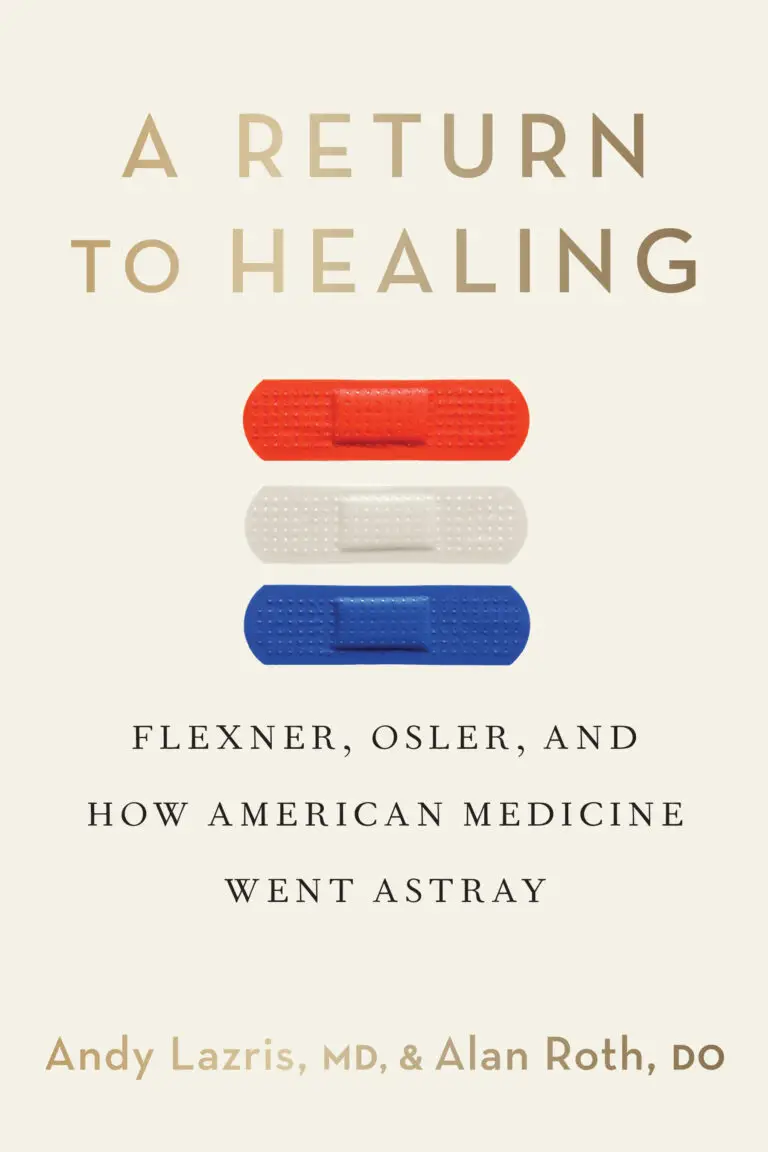
If you want more of the why behind this—and how it connects to the bigger mess of American healthcare—listen to Episode 47 and explore A Return to Healing. This is exactly the kind of “common sense, fully documented” conversation we’re here to have.
Common-Sense Nutrition FAQs
Is all processed food bad?
No. Cooking, freezing, blending, fermenting—normal. “Processed” is not the point. Ultra-processed is the problem.
Are GLP-1 shots always a bad idea?
Not automatically. But they’re not a replacement for nutrition, and they don’t make junk food nutritious. If they’re used, nutrition matters even more—not less.
Is fat actually healthy?
It can be. The bigger issue is the quality of the overall diet. Stop making fat the cartoon villain while sugar and refined flour sneak out the back door.
Should I buy organic?
Often, yes—when you can. But “organic” isn’t a magic spell. Where and how food is grown matters, and sometimes there are real environmental caveats.
Reviewer note
Written by Dr. Andy Lazris, MD. Medically reviewed by Dr. Alan Roth, D