“The greater the ignorance, the greater the dogmatism.” – William Osler, MD
(Companion to Episode 37 of the A Return to Healing Podcast, recorded August 18, 2025)
In this week’s A Return to Healing Podcast, Dr. Andy Lazris and Dr. Alan Roth deliver one of their most important conversations yet. Episode 37 takes a hard look at America’s healthcare “mess”: why it’s broken, who profits from the dysfunction, and — most importantly — how to fix it.
Drawing from their book A Return to Healing, the doctors remind us that repair doesn’t need to be complicated. The solution is remarkably simple — but it requires breaking the stranglehold of those who profit from the status quo.
Watch the Podcast Episode
Get the full story in our latest episode—watch now, and don’t forget to subscribe to our YouTube channel for more insight and honest conversation.
Prefer audio? Stream this episode on the A Return to Healing Podcast page →
Why the Healthcare System Is Failing
The first half of this episode — and the first half of A Return to Healing — explains why U.S. healthcare reform is urgently needed:
- Fragmented care that prioritizes tests and procedures over patient relationships.
- Over-medicalization and over-diagnosis that often harm more than heal.
- Profit incentives that elevate hospitals, insurers, and pharmaceutical companies above the needs of patients.
- Burnout and disillusionment among doctors, who feel trapped in a corporate system that ignores compassion.
Related reading: Over-Medicalization & Over-Diagnosis: When More Medicine Isn’t Better
Who Profits from the Medical Industrial Complex?
The second half of the book — and much of this episode — asks a tough question: If the system is failing patients, who is benefiting?
- Insurance companies profit by restricting coverage while raising premiums.
- Pharmaceutical giants profit from high drug costs and aggressive marketing.
- Hospitals and corporate healthcare networks profit from unnecessary procedures and inflated pricing.
- Politicians and lobbyists profit from campaign contributions and policy inertia.
The doctors argue that these stakeholders have no incentive to change, even as patients and frontline clinicians suffer.
Related reading: RFK Jr.’s MAHA Report: What the Latest Controversy Reveals About the Medical-Industrial Complex
Fixing American Healthcare Is Simple
Despite the complexity of U.S. healthcare reform debates — from the Affordable Care Act (ACA/Obamacare) to the latest “healthcare reform 2024” proposals — Dr. Lazris and Dr. Roth insist the solution isn’t complicated:
- Re-center primary care as the foundation of the system.
- Redirect profits away from corporations and back into patient care.
- Invest in prevention and continuity, not endless tests and procedures.
- Empower doctors to practice medicine without corporate interference.
- Establish policies that put patients, not profits, first.
Healthcare doesn’t need endless tinkering — it needs a return to common sense.
Why Simplicity Matters
Reform often stalls because the system is portrayed as too vast or too broken to fix. But as the doctors explain, when a train is off its tracks, the solution isn’t to rebuild the train — it’s to put it back where it belongs. By restoring focus on patients, realigning incentives, and reducing corporate capture, we can build a healthcare system that heals rather than exploits.
Continue the Discussion in A Return to Healing
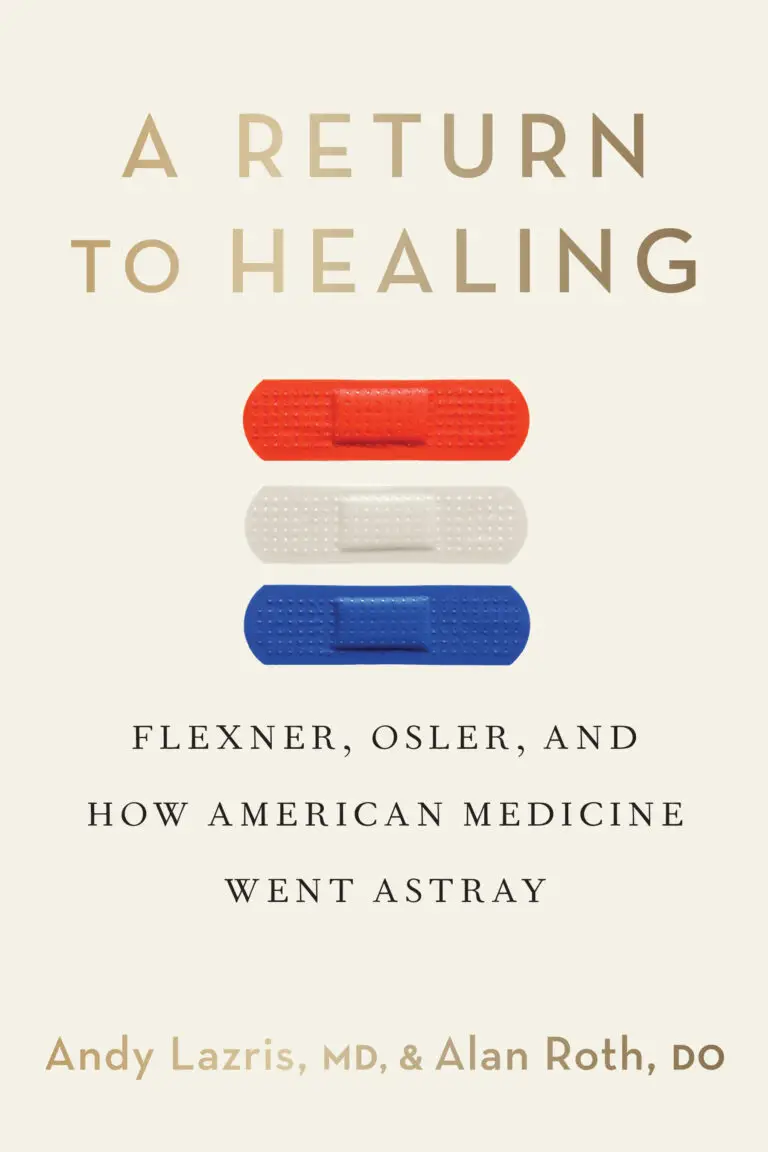
This episode is more than a discussion — it’s a living extension of the book A Return to Healing: Radical Solutions for America’s Healthcare Crisis.
- The first half of the book unpacks why our system is in chaos — from over-medicalization to corporate capture — which mirrors the opening of this episode.
- The second half exposes who profits from the dysfunction — insurance companies, pharmaceutical corporations, and hospital networks — exactly the focus of Dr. Lazris and Dr. Alan’s mid-episode breakdown.
- Finally, both the book and this episode deliver a simple, patient-centered fix: strengthen primary care, cut corporate influence, and reestablish the physician–patient relationship as the foundation of healthcare.
TL;DR – US Healthcare Reform
Episode 37 of A Return to Healing Podcast lays out why the U.S. healthcare system is broken, who profits from the dysfunction, and how to fix it. The solution is simple: put patients back at the center, support primary care, and stop letting corporations dictate the future of medicine.
FAQ: Healthcare Reform and Fixing the U.S. Healthcare System
1. What does “healthcare reform” mean in the United States?
Healthcare reform refers to efforts to change how the U.S. healthcare system is structured and funded. In A Return to Healing Podcast Episode 37, Dr. Andy Lazris and Dr. Alan argue that true reform means reducing corporate influence, strengthening primary care, and realigning incentives so patients—not profits—are the system’s focus.
2. How does healthcare reform affect health insurance?
Most U.S. healthcare reform debates center on health insurance: who is covered, what plans cost, and how much patients pay out of pocket. The doctors emphasize that while insurance changes matter, the deeper fix is restoring patient-centered care, reducing unnecessary procedures, and lowering costs by prioritizing prevention.
3. What is the history of healthcare reform in the United States?
Major reforms include Medicare and Medicaid (1965), the Affordable Care Act (ACA/“Obamacare,” 2010), and recent debates over “healthcare reform 2024” proposals. Episode 37 highlights that despite decades of reform, profits for insurers, hospitals, and pharmaceutical companies continue to grow—while patients often see little improvement.
4. Who profits from the current healthcare system?
Insurance companies, pharmaceutical corporations, and hospital networks profit most from the current system. They benefit from inflated pricing, high premiums, and policy gridlock. The doctors argue that any successful U.S. healthcare reform plan must limit corporate control and return resources to primary care and prevention.
5. What is the Affordable Care Act, and how does it fit into healthcare reform?
The Affordable Care Act (ACA), also known as Obamacare, expanded insurance coverage and set consumer protections, but it did not dismantle the corporate profit structure of American medicine. In this episode, the doctors suggest that real reform requires deeper changes beyond insurance rules—such as restructuring incentives and reducing industry capture.
6. What is the doctors’ plan for healthcare reform?
Dr. Lazris and Dr. Alan propose a simple fix:
- Make primary care the foundation of U.S. healthcare.
- Reduce reliance on expensive tests and procedures.
- Remove corporate interference in medical decisions.
- Redirect profits back to patient care.
They argue the system doesn’t need to be reinvented—just put back “on the tracks.”
7. How does healthcare reform impact patients directly?
For patients, reform should mean affordable access to doctors, fewer surprise bills, and care that prioritizes long-term health over profit. The doctors stress that meaningful reform is about more than health insurance plans—it’s about restoring trust, continuity, and compassion in medicine.
8. What role do politics play in U.S. healthcare reform?
Healthcare reform has been shaped by both Democratic and Republican agendas—from Obama’s ACA to Trump-era proposals to “make America great again” through healthcare changes. The doctors emphasize that political battles often obscure the simple fix: focusing on patient care, not corporate profits.