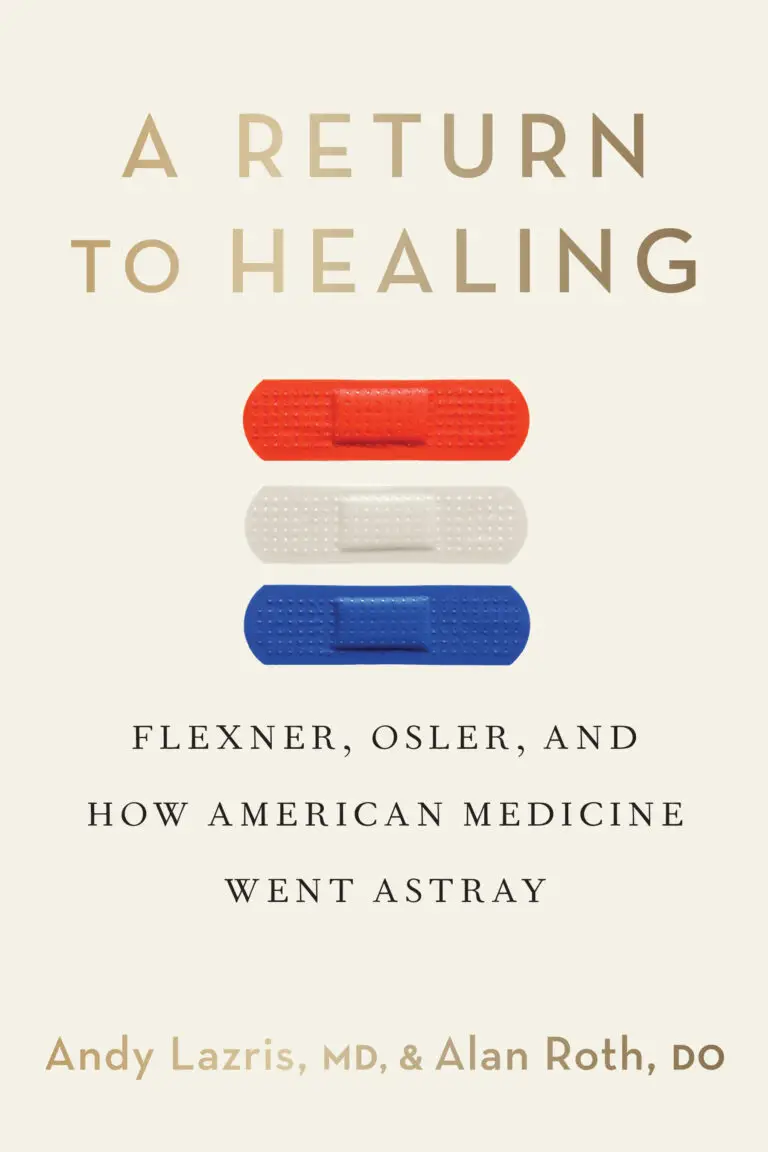
With so much talk about the decline of primary care, is the foundation of American healthcare truly at risk—or more important than ever?
During the Montefiore Medical Center’s SDFM Grand Rounds, Dr. Alan Roth, co-author of A Return to Healing, explores how the Flexner Report changed American medicine—redefining medical education, reshaping priorities, and paving the way for an industrialized, profit-driven system.
Speaking to clinicians, students, and advocates for reform, Dr. Roth highlights what was lost in the process: continuity, compassion, and the art of healing at the bedside.
Watch Dr. Roth Speak
Watch now, and don’t forget to subscribe to our YouTube channel for more insight and honest conversation.
Key Themes from the Grand Rounds Talk
1. How the Flexner Report Changed Everything
In 1910, Abraham Flexner’s review of medical schools sought to improve standards—but it also merged medicine with industry. Dr. Roth explains how Flexner’s alliances with the AMA and early funders of the medical-industrial complex created a system where technology and testing overshadow human connection.
2. Osler’s Vision: The Art and Heart of Medicine
William Osler, often called the father of modern medicine, believed science should serve the bedside—not the laboratory. Dr. Roth recalls Osler’s legacy: “The practice of medicine is an art, not a trade.” It’s a reminder that evidence without empathy is hollow.
3. When Data Replaces Dialogue
From prediabetes to over-screening, Dr. Roth details how medicine’s obsession with metrics and cutoffs has produced a “numerical epidemic.” As he explains, “We’ve created fake diseases—and harmed patients with too many drugs and too little conversation.”
4. The Cost of a Broken System
The U.S. spends more per capita on healthcare than any other nation—yet ranks low in longevity and equity. Dr. Roth points to the medical-industrial complex: insurers, hospital systems, and pharma companies that profit from sickness rather than wellness.
5. The Answer: Rebuild on Primary Care
Dr. Roth’s message is clear: real reform must start with primary care. Investment in prevention, continuity, and lifestyle medicine leads to longer lives, lower costs, and stronger trust. Every patient deserves a primary care physician—and every medical student deserves mentorship that puts people over profit.
How the Flexner Report Changed American Medicine
The Flexner Report, published in 1910, revolutionized U.S. medical education by raising scientific standards and shutting down low-quality schools. But it also sidelined community care and humanism.
Dr. Roth explains how this well-intentioned reform turned medicine into a hierarchy centered on research, specialization, and industry partnerships—laying the groundwork for what we now call the medical-industrial complex.
“Flexner’s goal was to elevate medicine through science...But in doing so, we lost something even more important—the relationship between doctor and patient.”
Dr. Alan Roth Share
Osler’s Legacy: The Art of Medicine
While Flexner emphasized laboratories, Sir William Osler taught that medicine’s heart beats at the bedside. Osler believed that science should serve humanity, not replace it.
Dr. Roth reflects on Osler’s timeless wisdom:
“The good physician treats the disease; the great physician treats the patient who has the disease.”
By contrasting Osler’s humanism with Flexner’s institutional model, Dr. Roth invites a rebalancing of science and empathy in American healthcare.
The Rise of the Medical-Industrial Complex
Today’s healthcare system is dominated by what Dr. Roth calls the medical-industrial complex—a network of hospitals, insurers, and pharmaceutical companies that profit from sickness more than wellness.
In his talk, Dr. Roth uses a visual diagram to show how incentives now reward procedures, data, and volume rather than prevention, time, and trust.
“We’ve created an industry that thrives on more—more tests, more drugs, more billing—while patients get less of what truly heals them.”
How the Flexner Report Still Shapes American Medicine
More than a century later, the Flexner Report’s impact on American medicine is still visible. Medical schools remain tethered to hospital systems, and aspiring physicians are often discouraged from entering primary care. Dr. Roth warns that unless we realign incentives, the same forces that drove industrialization in the 20th century will continue to erode compassion and continuity in the 21st.
Reclaiming Medicine Through Primary Care
Dr. Roth argues that primary care reform is the only sustainable path forward. Countries that invest in strong primary care—continuity, prevention, and community-based access—see longer lifespans and lower costs.
He calls for a national shift toward relationship-based medicine:
“Primary care should not be an afterthought—it’s the foundation of a healthy society.”
This vision echoes the core message of A Return to Healing: rebuild medicine around prevention, continuity, and humanity.
Returning to Healing
The Flexner Report modernized medicine but unintentionally stripped it of its humanity. As Dr. Roth concludes, the future of American healthcare depends on restoring Osler’s compassion and challenging the industrial model that Flexner helped create.
“We can’t undo the past,” he says. “But we can reclaim medicine’s soul—by treating people, not numbers.”
➡️ Watch the full video
📘 Read more in A Return to Healing
💡 Learn more about Primary Care for All Americans
Frequently Asked Questions (FAQ)
What was the Flexner Report, and why does it matter today?
The Flexner Report, published in 1910, standardized U.S. medical education. While it improved quality, it also promoted institutional medicine over community-based care, fueling the rise of specialization and the medical-industrial complex.
Who was William Osler, and what did he believe?
Sir William Osler believed that medicine is both science and art. He taught doctors to focus on the patient, not just the disease—an approach Dr. Roth advocates for reclaiming today.
How did the Flexner Report affect minority medical schools?
Many historically Black and women-led medical schools were defunded or closed after the Flexner Report, narrowing access to medical education and reducing diversity in healthcare.
What is the medical-industrial complex?
It’s the system of hospitals, insurers, and pharmaceutical companies that profit from procedures and prescriptions rather than prevention and human connection.
How can primary care fix the problem?
Investing in primary care means focusing on long-term relationships, prevention, and shared decision-making—values that improve outcomes and restore trust in medicine.